ZAMBOANGA CITY Philippines, – People living in low-lying and coastal areas should begin moving out now in anticipation of the likely impact of climate change, an official warned alluding to the projected rise in sea levels once polar ice melts as a result of higher atmospheric temperatures due to the phenomenon called global warming.
Presidential Assistant on Climate Change Elisea Gozun said a rise in sea waters and other disasters will endanger people living in these areas.
Gozun urged local government units and other agencies to undertake the necessary steps to safeguard the lives of coastal dwellers.
Gozun stressed that the effects of the climate change are gradually being felt, adding the forecasts have warned that low-lying areas in the country are really at high risk.
“Those leaving along the coastlines, depending on where they are and how near the sea they are and for those actually living on the sea itself and are staying in below sea level areas or already right now residing in areas that get inundated, the only way you can safeguard yourselves is really to move out down the line,” she advised.
She said one way to reduce the impact of climate change is through such measures as planting more mangroves as these can serve as natural barriers to storm surge and rising sea level.
“We should not wait for the disasters to happen. We do not want to have climate refugees later on. Let’s plan for this because we know it is likely to happen,” she stressed.
She said the number one objective of the national government is to develop a more climate resilient Philippines, as the impacts of climate change are reportedly already having major adverse impacts on the country.
“The priority action for us is really to adapt to this so we can be resilient so that our economic growth will continue and we can alleviate poverty in the country,”
"The Philippines is very at risk for climate change" The government should make a strong commitment to make the Philippines resilient to climate change"
Via Reuters
Showing posts with label Philippines. Show all posts
Showing posts with label Philippines. Show all posts
Tuesday, June 28, 2011

Saturday, June 11, 2011
Climate Change in the Basic Education in Albay, Philippines
LEGAZPI CITY, Philippines - In the province of Albay, students will be welcoming the new school year 2011-2012 learning about climate change.
 Albay, Philippines
The concept of a warm planet may be a difficult thing to grasp for both young and adult learners. But local officials in the province assured that they have simplified the ideas with the help of teachers and scientists. They have then developed and included these ideas in the regular curricula of students in both elementary and high schools. The incorporation of climate change in the curricula in the province of Albay was already approved by the education department.
Terrel said this is in line with the Albay provincial government's climate change adaptation plan.
Albay is the only province in the Philippines that integrated climate change in school lessons.
Located some 500 kilometers southeast of Manila, the country's capital, Albay's geographical position made it a magnet to various disasters. The province sits at the typhoon belt and of the 20 typhoons that hit the country every year, five typhoons hit Albay directly. It faces the Pacific Ocean, making its coastal communities vulnerable tsunami. Albay is also home to Mayon Volcano, an active volcano that erupted 49 times in the past four centuries.
Climate change which is expected to worsen disaster impacts to this province. Local officials, private sector and residents, however, refused to remain victims of calamities and are preparing for the inevitability of a warmer planet.
Albay Governor Joey Salceda has set up the Center for Initiative and Research Center for Climate Adaptation (CIRCA) an agency that develops and implements adaptation projects which include mangrove planting, cleaning up of rivers and canals and organic farming.
Teachers in Albay are well prepared on this new curricula.
"We will also encourage students to be more involved in their community. For example, if the teacher lectured them on the effects of illegal logging, students must also participate in tree planting projects," she said.
"Albay sets a very good example to the entire Philippines I hope all provinces will also take initiatives to adap the changing climate. Strong political will is very necessary in every underataking of the province. I salute Governor Salceda for preparing its people to combat calamities that would come."
Via reuter

The concept of a warm planet may be a difficult thing to grasp for both young and adult learners. But local officials in the province assured that they have simplified the ideas with the help of teachers and scientists. They have then developed and included these ideas in the regular curricula of students in both elementary and high schools. The incorporation of climate change in the curricula in the province of Albay was already approved by the education department.
Terrel said this is in line with the Albay provincial government's climate change adaptation plan.
Albay is the only province in the Philippines that integrated climate change in school lessons.
Located some 500 kilometers southeast of Manila, the country's capital, Albay's geographical position made it a magnet to various disasters. The province sits at the typhoon belt and of the 20 typhoons that hit the country every year, five typhoons hit Albay directly. It faces the Pacific Ocean, making its coastal communities vulnerable tsunami. Albay is also home to Mayon Volcano, an active volcano that erupted 49 times in the past four centuries.
Climate change which is expected to worsen disaster impacts to this province. Local officials, private sector and residents, however, refused to remain victims of calamities and are preparing for the inevitability of a warmer planet.
Albay Governor Joey Salceda has set up the Center for Initiative and Research Center for Climate Adaptation (CIRCA) an agency that develops and implements adaptation projects which include mangrove planting, cleaning up of rivers and canals and organic farming.
Teachers in Albay are well prepared on this new curricula.
"We will also encourage students to be more involved in their community. For example, if the teacher lectured them on the effects of illegal logging, students must also participate in tree planting projects," she said.
"Albay sets a very good example to the entire Philippines I hope all provinces will also take initiatives to adap the changing climate. Strong political will is very necessary in every underataking of the province. I salute Governor Salceda for preparing its people to combat calamities that would come."
Via reuter
Sunday, June 5, 2011
Climate Change: Protect the Philippine Forests
The Philippines is so blessed to have a mega diverse resources. The Philippine forest serve as habitat of more than 6,000 plant species and numerous animal species including the endangered Philippine Eagle and other species on the brink of extinction.
 Photo Credit
Climate Change and Philippine forest are directly linked to each other. changes in climate are affecting the forest and its ability to deliver its environmental services. Degradation of the forest resources results to emissions of carbon dioxide in the atmosphere will contribute to climate change.
Tropical forests in countries like the Philippines are important sources and sinks of carbon. Philippine forest can act as carbon sink, expending carbon stocks, and substituting wood products for fossil fuels.
With the dwindrling forests, coupled with the threats of more disasters brought by climate change, it is high time for a log ban and a massive reforestation effort. serious government efforts must be done to protect the Philippines from disasters brought by climate change.

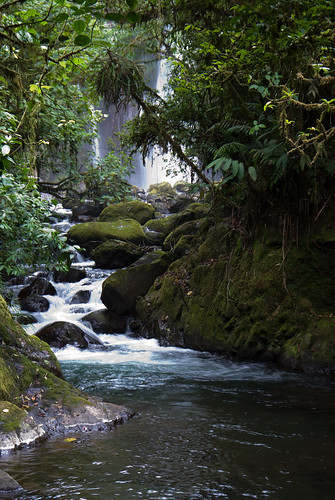
Climate Change and Philippine forest are directly linked to each other. changes in climate are affecting the forest and its ability to deliver its environmental services. Degradation of the forest resources results to emissions of carbon dioxide in the atmosphere will contribute to climate change.
Tropical forests in countries like the Philippines are important sources and sinks of carbon. Philippine forest can act as carbon sink, expending carbon stocks, and substituting wood products for fossil fuels.
With the dwindrling forests, coupled with the threats of more disasters brought by climate change, it is high time for a log ban and a massive reforestation effort. serious government efforts must be done to protect the Philippines from disasters brought by climate change.
Friday, September 4, 2009
Efforts to combat Climate Change
Climate change is the most alarming issue of the modern time. Carbon dioxide warm the planet naturally by trapping solar heat in the atmosphere.
This is the good thing that keeps out planet very habitable.However, we have dramatically altered the gases in the atmosphere.
Thereby increasing the temperature of the earths surface. we are now seeing changes, glaciers are melting, the number of severe storms and droughts are increasing. we have to take our action NOW...
These are our photos to Mt. Blit. when we were having our tree planting..
It was one of the most exciting ride I ever had.
We traverse a very rough road.


 This is where I planted my first seedling along the steep slope of Mt. Blit to help mitigate climate change.
How about you when will you do your part?
This is the good thing that keeps out planet very habitable.However, we have dramatically altered the gases in the atmosphere.
Thereby increasing the temperature of the earths surface. we are now seeing changes, glaciers are melting, the number of severe storms and droughts are increasing. we have to take our action NOW...
These are our photos to Mt. Blit. when we were having our tree planting..
It was one of the most exciting ride I ever had.
We traverse a very rough road.


 This is where I planted my first seedling along the steep slope of Mt. Blit to help mitigate climate change.
How about you when will you do your part?
Wednesday, August 5, 2009
Climate change impacts and the Philippines

The earth is definitely warming. Signals of a changing climate, including increasing trends in temperature, sea level rise and extreme climate events, are already evident in the Philippines. And as the warming continues, the effects will become more catastrophic.
With climate change will come water shortages and decreases in agricultural productivity and food security. Our health will be threatened by heat stress and increased chances of exposure to infectious diseases. Those living in low-lying coastal areas may become climate refugees as their homes are destroyed. And tourism, an important source of income for many, will decline.
Climate change will also bring more extreme weather, from floods to droughts, forest fires to tropical cyclones. As extreme climate events increase in strength and frequency, more and more people will risk losing their homes and lives.
"Every Filipino must prepare for this changes."
Source
Friday, July 31, 2009
Phil. Geography on Climate Change
In Australia the region focused on dry and wet tolerant crops. Since they are used to unpredictable rainfall patterns. Filipinos on the other hand is not used to shifting rainfall patterns. A farmer in Cagayan Valley was complaining that their corn crops was destroyed by a fungus due to unseasonal heavy rains. The same unexpected rainfall ruined the manggahan festival in Guimaras. Jared Diamond of UCLA says that the economic development is much hampered by the climate and geography of the region.
The issue of climate change means seeing beyond the increasing concentrations of green house gases in the atmosphere and fluctuating global surface temperatures. We imagine how and why these concentrations have risen and how human societies can and will cope with changes they bring. Just as importantly, we imagine who has been and will be benefiting and who has been and will be losing, and where they are.
Climate models predict an increase in global surface temperatures that can translate to more destructive storms, extreme drought conditions, sea level rise and highly stressed ecosystems—changes in local conditions that will inevitably impact food production, infrastructures, economies and communities everywhere. We know that not all countries in the world may have mechanisms to adjust and cope with these conditions. Not all places and communities are equipped to survive in drastic changes in the immediate environments. And not all countries have contributed to all these the same way.
This is where one realizes that all are interconnected at the local, regional and global levels. That what you do to the strand you do to the web. I hope that we all will realize the significance of our individual action to mitigate the climate change.
Subscribe to:
Posts (Atom)